
Suzuki style group lessons offer a unique and collaborative learning experience for music students. To ensure these group sessions are effective and engaging, it’s crucial for teachers to plan meticulously. In this guide, we’ll explore the essential elements of planning Suzuki style group lessons, emphasizing the importance of incorporating main techniques, warm-up exercises, repertoire, games, ear training, and performance opportunities.

Section 1: Setting the Tone with Main Technique/Goal/Theme
Every Suzuki group lesson should have a clear focus. Start by identifying a main technique, goal, or theme for the lesson. This could be anything from mastering a specific bowing technique to exploring a particular musical concept or even a simple holiday theme.
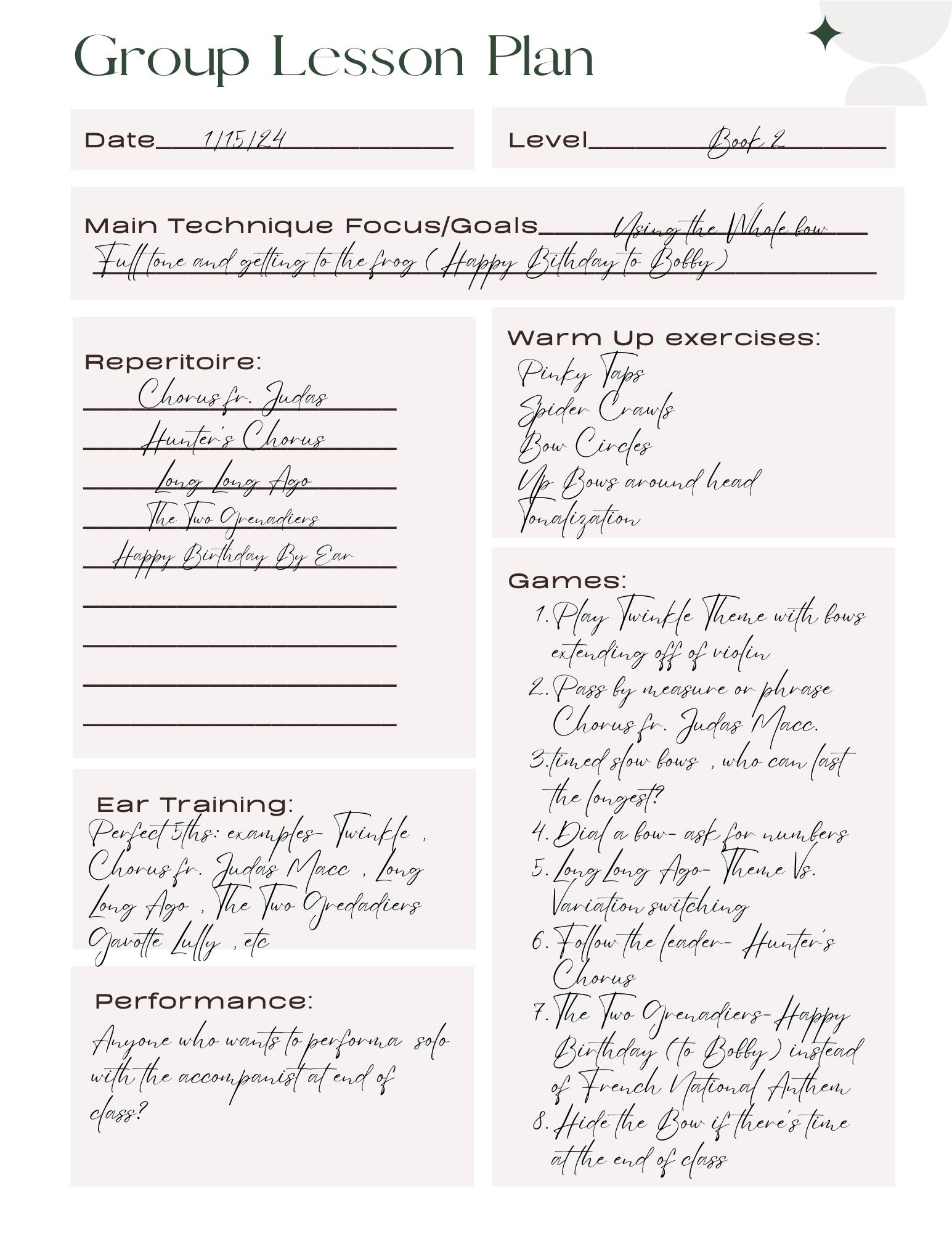
For example a good Book 2 level focus for a group lesson session could be “using the whole bow (aka getting to the frog) to create a rich tone”
Section 2: Energizing Warm-Up Exercises
Warm-up exercises are vital to prepare students physically and mentally for the lesson. Include activities that target the specific technique or theme chosen for the day. These exercises should be engaging and set a positive atmosphere for the rest of the session.
In our example group class the warm ups could be bow exercises such as pinky taps, spider crawls, bow circles, up bow that fly around the head and then full bows on the Tonalization exercise at the beginning of the Suzuki Book2
Section 3: Repertoire Selection
Curate a list of repertoire that aligns with the main focus of the lesson. Ensure that the pieces are challenging yet achievable for the group. This section should also include variations suitable for different skill levels within the group.
For our example, whole bows, playing at the frog, and tone repertoire pieces to list as possible review at group lesson could be: Chorus from Judas Macc. Hunter’s Chorus, Long Long Ago, Twinkle Theme etc.
Section 4: Games that Reinforce the Lesson’s Theme
Integrate games that directly relate to the main technique or theme. Games add an element of fun and can reinforce learning in a dynamic way. Examples include rhythm games, note-reading challenges, and ensemble playing activities.
In our example class we could have the group play the following “games” 1. Twinkle theme with the bows extending off the violin to enforce whole bows. 2. A timed slow bow/long tone challenge (who can last the longest?) 3. Dial a Bow ( play fast and slow bows using a metronome according to random phone numbers as the beats per bow stroke)
Section 5: Ear Training Activities
Ear training is a crucial aspect of Suzuki education. Include activities that enhance listening skills and promote musical sensitivity. This could involve playing by ear, identifying intervals, or practicing pitch matching exercises.
For our book 2 level example, explain what a perfect 5th is and what they sound like, have students find them in pieces they already know like twinkle theme, chorus fr. Judas Macc. etc
Section 6: Performance Opportunities
Provide students with chances to showcase their progress. Whether it’s a small in-class performance or a more formal recital, performance opportunities motivate students and allow them to experience the joy of sharing music with others.
Try to save 10 min at the end of group class for students to perform a piece of their choosing for the group. If there’s time, have the audience students comment on something positive or that they liked about the performance.
Section 7: The Power of a Printable Group Lesson Planner Template
A printable group lesson planner template can streamline the planning process. You can make your own or get pre-made ones here. Your template should include dedicated sections for the main technique/goal/theme, warm-up exercises, repertoire, games, ear training, and performance opportunities. Teachers can use this tool to organize their thoughts, ensuring a well-rounded and structured lesson plan.
The linked printable/downloadable Group Lesson template Includes bonus lists of game ideas and main focus suggestions to spark creativity. These lists can serve as quick references for teachers seeking new and exciting ways to enhance their group lessons. They can help you knock out multiple group plans quickly and easily.
Mastering the art of Suzuki style group lessons requires thoughtful planning and creativity. By incorporating main techniques, warm-up exercises, repertoire, games, ear training, and performance opportunities, teachers can create enriching musical experiences for their students. This group lesson template and bonus lists offer valuable resources to streamline the planning process, making each group lesson organized, efficient, and enjoyable.
 Julia E. Seltzer
Leave a comment