You sit down with your child for violin practice, only to hear them say: “I don’t want to!” “Violin is boring.” Or perhaps they try to rush through practice, playing fast and sloppy, so they can get to the next activity. If you’ve faced these common practice struggles, you’re not alone!
As a parent, making violin practice fun and engaging at home can feel like a challenge. But what if you could turn practice time into something your child looks forward to, rather than dreads? That’s where my e-book, “Violin Games: Make Practice Fun!”, comes in, a powerful tool packed with creative ways to make practice engaging, exciting, and effective.
The Problem: Practice Fatigue
Kids often resist practicing because it feels like a chore. They don’t always understand the importance of repetition, patience, and focus, and let’s be honest, the same old practice routine can get dull. The good news is, this resistance is completely normal. But, it doesn’t have to stay this way.
Imagine if your child was excited to practice every day; ready to explore new challenges, play creative games, and truly enjoy their time with the violin. That’s where practice games make all the difference.
The Solution: Violin Games to Save the Day
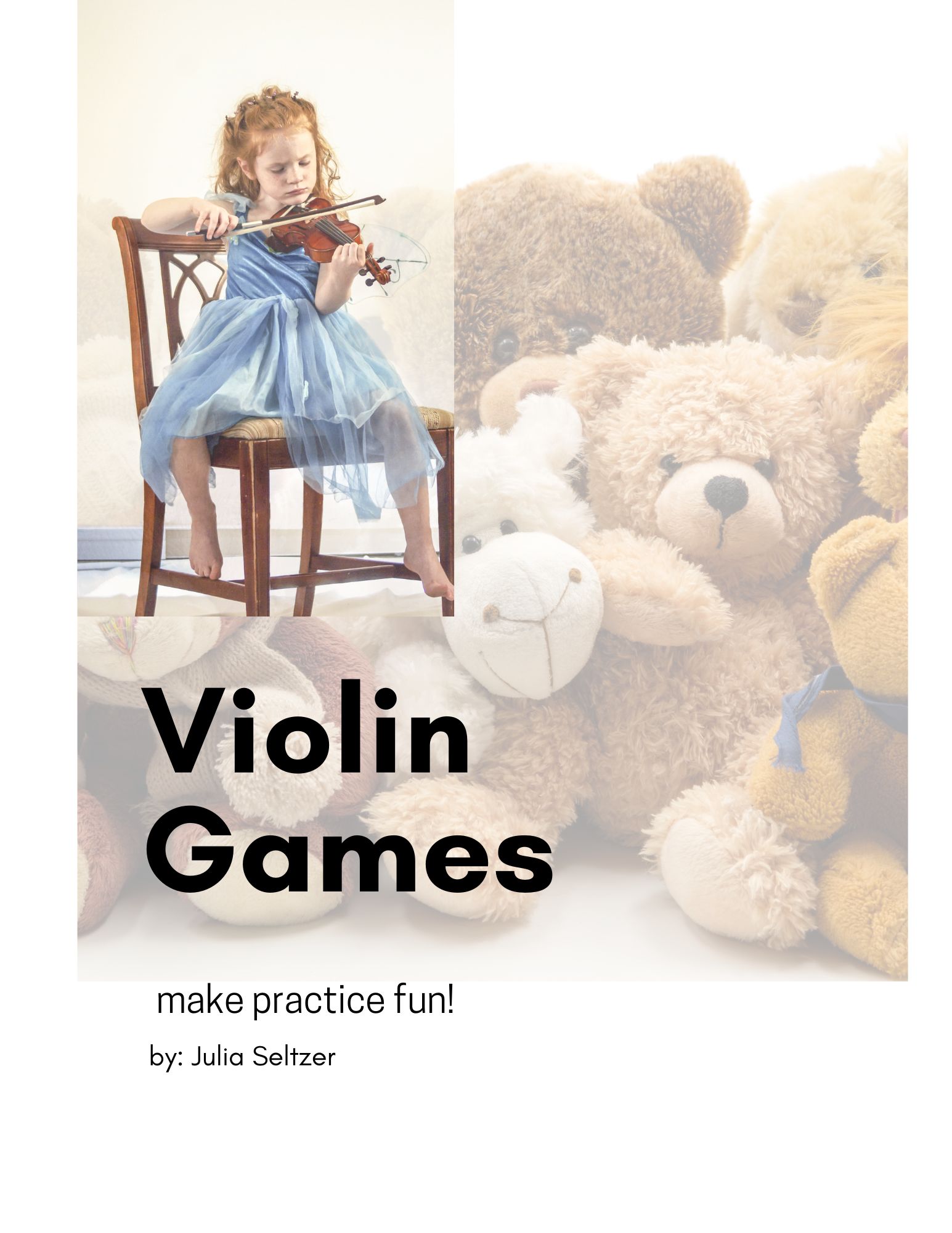
“Violin Games: Make Practice Fun!” is your new secret weapon to solve those practice problems. With 33 pages full of exciting games, this book is designed to grab your child’s attention and turn practice into an enjoyable experience for both of you.
The e-book is packed with a variety of activities such as:
Card games that make reviewing scales or techniques fun.
Balancing games that challenge focus and coordination.
Games of chance that add an element of surprise to each practice session.
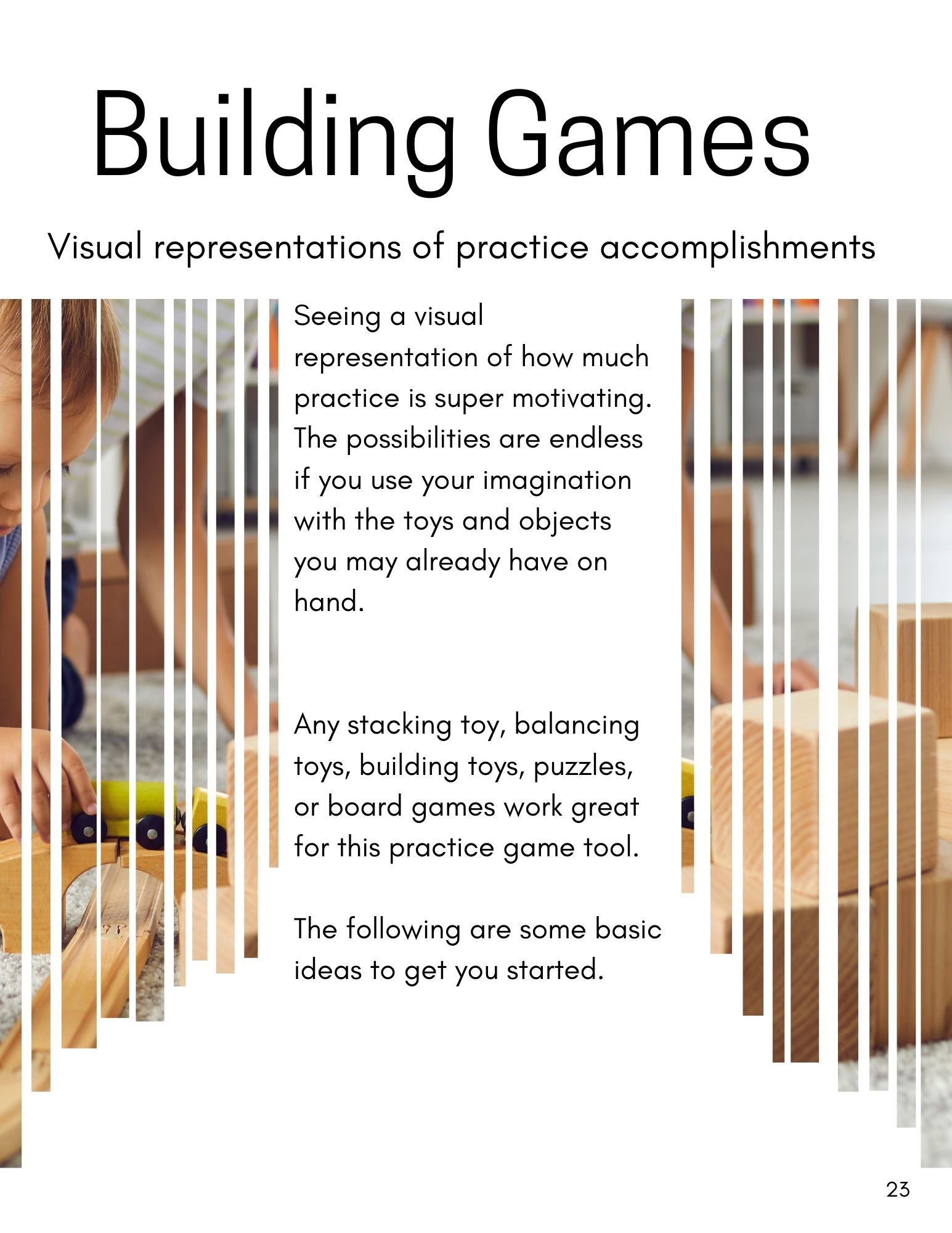
Building games that gradually stack skills and make learning feel like a playful puzzle.
Structure games that help build consistency without feeling repetitive.
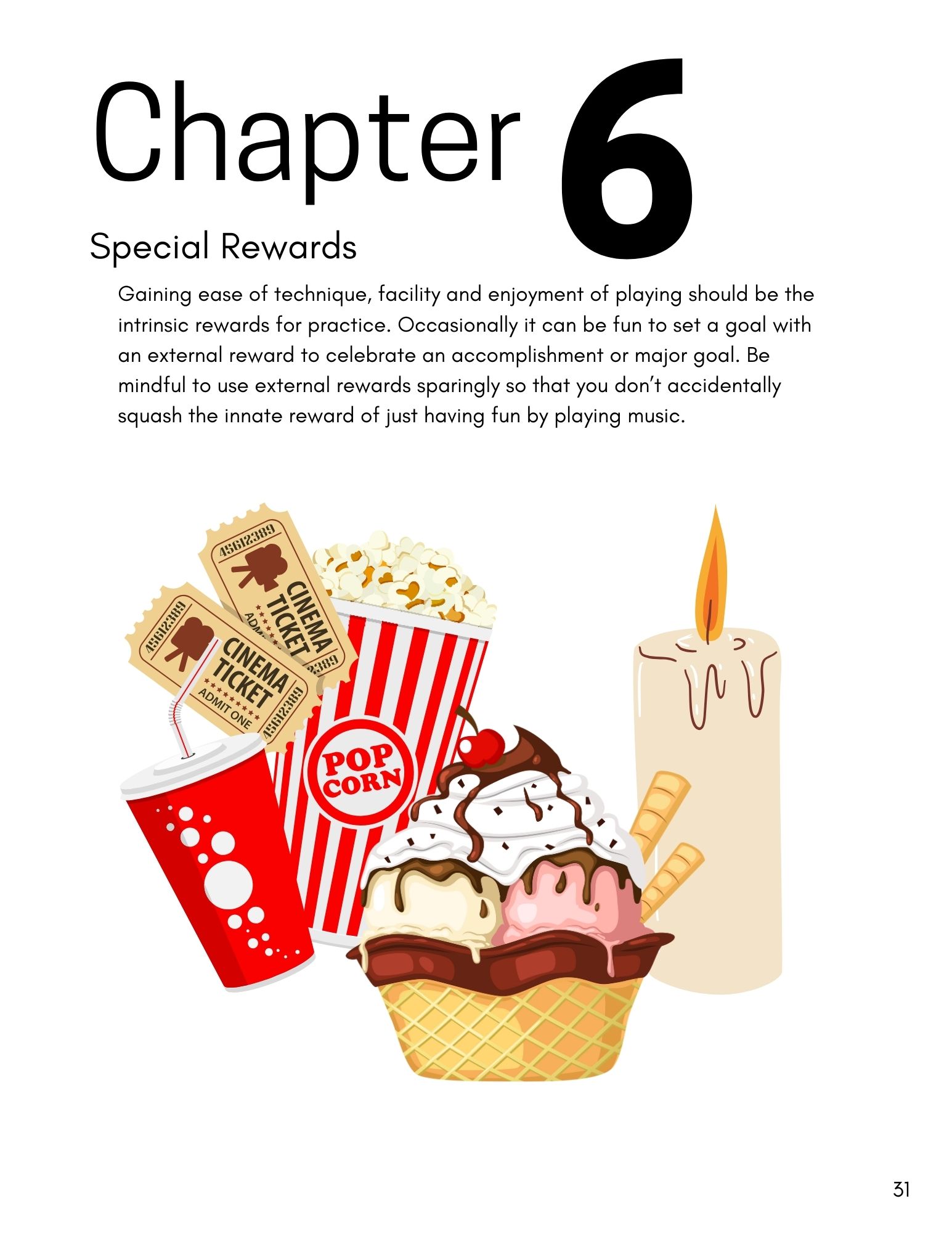
Special rewards techniques for an extra motivational boost when needed!
Not only will this help your child look forward to practice, but it will also make you feel like a hero, transforming what used to be a struggle into a fun, shared experience. You’ll find that these games motivate your child to practice with greater focus, attention to detail, and enthusiasm.
Example pages:
Why This E-book Works
This e-book isn’t just a list of random games. Each game is designed to accommodate specific practice goals in mind—whether it’s improving bow control, memorization, posture, rhythm, intonation, or musical expression. It’s not about playing aimlessly, but about achieving real progress through play.
Parents who use this book have noticed:
Less resistance to starting practice.
More engagement throughout the practice session.
Improved quality of practice (kids slow down, focus, and pay attention to detail).
A positive, fun atmosphere that replaces practice-time battles.
A Resource for Parents AND Teachers
While “Violin Games” is an incredible tool for parents, it’s also a great resource for teachers. If you’re a violin teacher looking for creative ways to inspire your students, this e-book will give you a jumping-off point for incorporating games into lessons. From in-lesson games to take-home activities, you’ll discover new ways to keep students engaged and motivated both in and out of the studio.
Ready to Transform Practice Time?
If you’re ready to make practice time something your child looks forward to—and a bonding experience that boosts their violin progress—“Violin Games: Make Practice Fun!” is here to help. Packed with fun and motivating games, this e-book will empower you to guide your child’s practice sessions with creativity and excitement.
Grab your copy of Violin Games today, and become the hero of at-home practice! [Link to Purchase]
By using these games, you’ll not only make violin practice more fun and effective but also create lasting memories with your child. Practice doesn’t have to be a struggle—turn it into a time of joy, learning, and connection.
How to Focus Children During Private Violin Lessons
Teaching children to play the violin can be a rewarding but challenging task, especially when it comes to keeping them focused during lessons. One innovative strategy I’ve found incredibly effective is the use of a “Silly Pass.” This little tool has transformed my teaching approach and made lessons more enjoyable and productive for my students.
What is a Silly Pass?
A Silly Pass is a small bookmark that I give to my extra distractible students at the beginning of each lesson. This pass can be exchanged for 60 seconds of “silly time.” During this time, students can wiggle, make strange noises, talk about something non-music-related, give their mom a hug, or take a break away from their violin. The idea is to give children the freedom to take a break when they feel overwhelmed, knowing that they have permission to be silly and release some energy.
The Benefits of the Silly Pass
Improved Focus: When students know they have the option to take a break whenever they need it, they often focus better during the lesson. The knowledge that they can use their Silly Pass at any time helps them stay on task because they feel in control.
Self-Regulation: Surprisingly, most students save or hoard their Silly Pass until they really, really need it. Often, they end up not using it at all by the time the lesson is over. This teaches them to self-regulate and recognize when they genuinely need a break.
Reduced Anxiety: The Silly Pass reduces the pressure students might feel to be perfect or constantly attentive. Knowing they have a break available makes the learning environment less stressful and more supportive.
Fun and Engagement: The Silly Pass adds an element of fun to the lesson. Children look forward to their lessons because they know there’s an opportunity for a little bit of controlled silliness, which makes the whole experience more enjoyable.
Implementing the Silly Pass
Implementing the Silly Pass in your lessons is simple. Here’s how you can get started:
Create Your Passes: You can make your own Silly Passes or use a pre-designed template. I have a free PDF of a monkey-themed Silly Pass that I use, and a link to a Canva template for teachers or homeschool parents to design their own.
Introduce the Concept: Explain to your students what the Silly Pass is and how they can use it. Make sure they understand that it’s a special privilege to be used wisely.
Set Boundaries: While the Silly Pass is a fun tool, it’s important to set boundaries. Make it clear that the pass can only be used once(or twice) per lesson and that “silly time” is limited to 60 seconds (or whatever you choose).
Encourage Responsible Use: Encourage students to think about when they really need a break. Discuss how it can be helpful to save the pass for moments when they feel truly overwhelmed.
Free Resources
To help you get started, I’m sharing a free PDF of my monkey-themed Silly Pass, which you can download and print. Additionally, there’s a Canva template available for you to customize your own Silly Passes. These resources are great for teachers or homeschool parents looking to add a bit of fun and focus to their lessons.
The Silly Pass is a simple yet powerful tool that can make a significant difference in your students’ ability to focus and enjoy their violin lessons. By giving them the option to take a brief break, you empower them to manage their own learning process and make the experience more engaging and fun. Try it out in your next lesson and see the positive impact it can have!
Your Turn!
Do you have any unique strategies for keeping your students focused? Share your tips and experiences in the comments below. Let’s create a supportive community where we can all learn and grow together.
In the realm of music education, there’s much more to learn than just mastering the notes on the page. Beyond technique and theory lies a deeper understanding of musical etiquette – the unspoken rules that govern the relationship between performers and their audience. Recently, in a Suzuki-style violin group lesson, I embarked on a creative journey to impart these invaluable lessons through a fun and interactive game.
Setting the Stage: As the curtains rose on our lesson, the theme of the day was clear: recital etiquette. We delved into discussions about what constitutes good behavior for both performers and audience members alike. From the graceful art of bowing to the timely applause at appropriate moments, every detail was examined with care.
Navigating Distractions: But in the unpredictable world of live performances, distractions often lurk in the shadows, ready to derail even the most polished presentation. From the rustle of papers to the cry of a restless toddler, we brainstormed a comprehensive list of potential interruptions. More importantly, we learned how to tune out these distractions and stay focused on our performance.
Enter the Performance Game: With the stage set and the lessons learned, it was time to put theory into practice. I introduced a unique performance game designed to reinforce the principles of recital etiquette in a playful manner. As each student took the spotlight to perform a piece, I distributed cards among their peers – some containing common distractions like sneezing or a cell phone ringing, while others remained blank, awaiting words of encouragement.
Spreading Positivity: As the performances unfolded, so did the magic of encouragement. Before they put pen to paper, we took a moment to brainstorm specific compliments, aiming to move beyond generic praise. From the graceful postures of a proper bow hold to the nuanced dynamics that breathed life into a piece, we celebrated the details of what a fantastic performance could be. I wrote their ideas on a whiteboard in the room for them to reference as needed during their peer’s performances. Armed with a repertoire of thoughtful observations, students embarked on a mission to uplift their peers with targeted feedback, fostering a culture of appreciation and growth within the group. Students eagerly scribbled uplifting comments on their blank cards, ready to offer support to their fellow musicians. This simple act of kindness not only boosted the confidence of the performers but also cultivated a deeper understanding of musical craftsmanship among all participants as well as fostered a sense of camaraderie within the group.
Bringing the Game Home: Now, as I reflect on the success of our lesson, I’m excited to share this innovative game with fellow music educators. With a digital download of printable cards and detailed instructions, teachers can effortlessly incorporate this activity into their own group lessons, fostering a culture of respect and encouragement among their students. You can find this group game in the Silly String Games Etsy Page HERE.
In the world of music, mastering the technical aspects of performance is only part of the journey. By instilling the principles of recital etiquette early on, we empower our students to become not just skilled musicians, but gracious performers and attentive audience members. As we continue to spread the joy of music, let us remember that the true beauty lies not just in the notes themselves, but in the harmony we create together.
This timeless masterpiece, crafted in the early 18th century, stands as a testament to Bach’s genius and innovation in the realm of solo instrumental music. In this blog post, we’ll delve into this jubilant piece and explore a comprehensive teaching guide designed to help you prepare your students.
Exploring Bach’s Preludio
Bach’s Preludio is a jewel in the crown of solo violin repertoire, showcasing the composer’s mastery of form, melody, and technique. Set within the larger context of Bach’s solo violin partitas, the Preludio stands out for its exuberant energy and virtuosic demands.The early 18th century was a period of remarkable innovation in music theory, composition, and performance practice. Advancements in technology, such as the printing press, revolutionized the dissemination of musical scores, allowing Bach’s compositions to reach a wider audience. Against this backdrop of cultural and artistic flourishing, Bach’s solo violin partitas emerged as groundbreaking works that pushed the boundaries of musical expression.
Preparing for Mastery
Before we embark on any musical journey, it’s essential to ensure that aspiring violinists are equipped with the necessary technical skills. That’s where my Teaching Guide comes in. With a preparation checklist, I guide teachers through the essential techniques required of the aspiring student to tackle Bach’s Preludio with confidence and precision. From bowing techniques to shifting exercises, each aspect should be meticulously addressed and checked by the teacher to lay a solid foundation for success.
My Teaching Guide helps you decide whether a student is ready to begin work on this piece or possibly what “hole” in their technique they need to master before beginning.
This piece’s preparation checklist is:
Collé bow hand motion/ finger and wrist bow stroke action
Comfortably shifting through 5th position with accurate intonation
Proper relaxed Left hand shape and ability to hold fingers down in double stops/chords in positions 1/2-5
Can play scales in octaves comfortably and in tune
The idea of a “home string” when doing basic bariolage
Unlocking the Secrets
Once the groundwork is laid, my Teaching Guide provides a roadmap for navigating the intricacies of the Preludio. Through a series of preview practice strategies, students are introduced to key elements of the piece, from scales in E major to shifting warm-ups. Custom drills and exercises target specific challenges, such as bariolage bowing techniques (for two and three strings) and fingered octave stretches, ensuring that students are fully prepared to tackle even the most demanding passages.
Whether you’re new to teaching violin or a seasoned performer transitioning to instruction, my guide is for you. I understand the intricate steps and details required to learn and teach a new piece effectively. Each of my guides include preparatory exercises for mastering the necessary skills and custom drills targeting the trickiest sections that often challenge my own students.
Following my guides will enhance your students’ success in learning pieces easily and correctly the first time, reducing the need for extensive corrections later on. It’s important to resist the temptation to let students dive straight into new pieces; dedicating at least a week to preparatory exercises can prevent them from inadvertently practicing incorrect notes or rhythms, which can be more challenging to correct later.
This approach breaks the cycle of frustration that can lead students to believe learning the violin is too difficult or requires too much effort. By laying out the steps in small, manageable increments with ample repetition, anyone can learn to play music. I’ve meticulously designed these guides to provide exercises, previews of challenging sections, and techniques necessary for mastering even the most advanced pieces through gradual progression of technique.
It’s important to note that these guides are intended for teachers already proficient in violin technique and playing. Always defer to your private teacher for guidance on posture and other live lesson aspects. These guides are not designed for self-help or self-teaching purposes.
Streamline Your Teaching
Don’t let the complexity of Bach’s Preludio overwhelm you. With my Teaching Guide by your side, you can streamline your teaching and planning process, empowering your students to tackle this iconic piece with confidence and proficiency. Available for purchase on Etsy or Teachers Pay Teachers, my guide is your essential first step to introducing Bach’s Preludio to your students.
So, why wait? Take this step towards musical mastery and purchase my guide today. Your students will thank you for it!
Suzuki style group lessons offer a unique and collaborative learning experience for music students. To ensure these group sessions are effective and engaging, it’s crucial for teachers to plan meticulously. In this guide, we’ll explore the essential elements of planning Suzuki style group lessons, emphasizing the importance of incorporating main techniques, warm-up exercises, repertoire, games, ear training, and performance opportunities.
Section 1: Setting the Tone with Main Technique/Goal/Theme
Every Suzuki group lesson should have a clear focus. Start by identifying a main technique, goal, or theme for the lesson. This could be anything from mastering a specific bowing technique to exploring a particular musical concept or even a simple holiday theme.
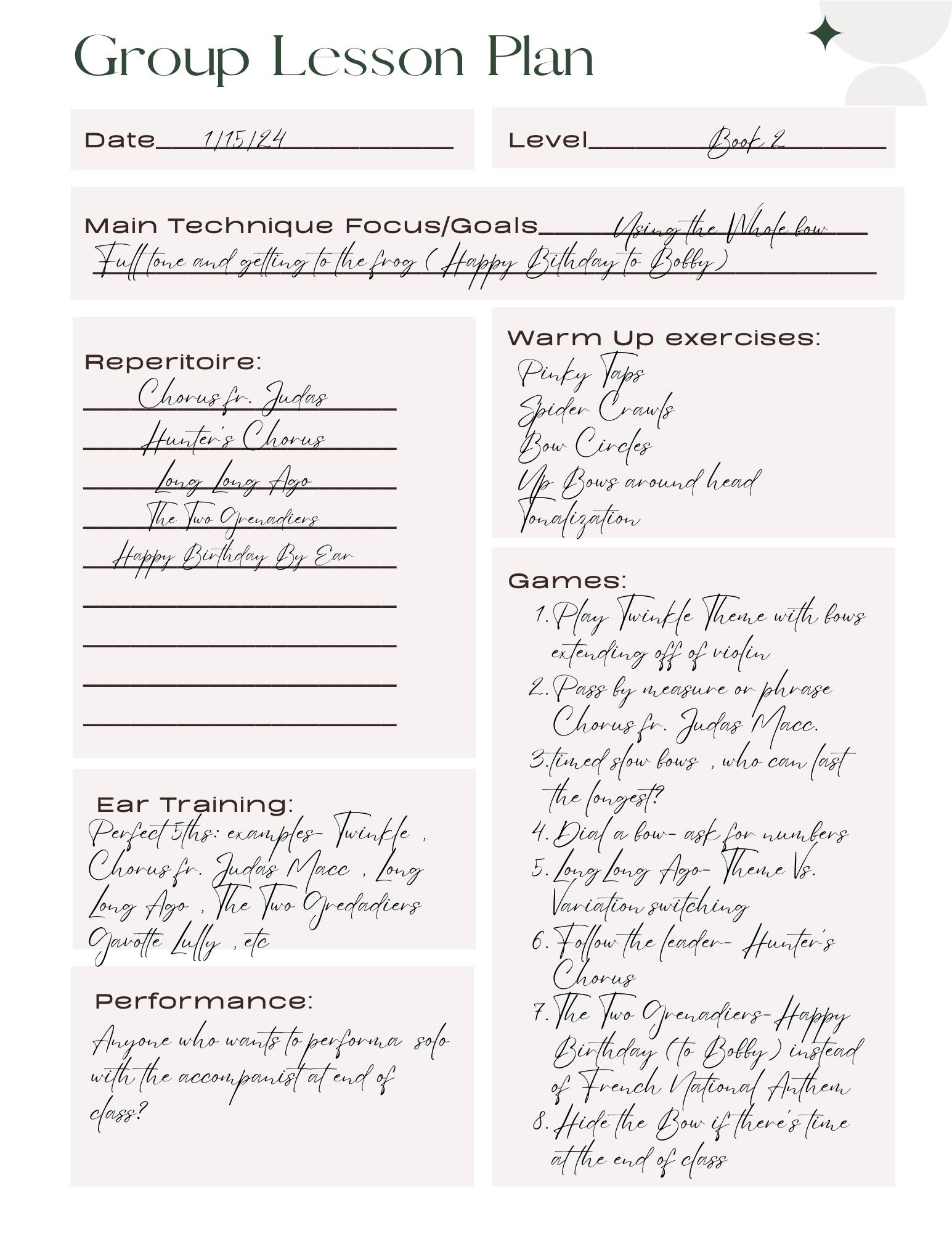
For example a good Book 2 level focus for a group lesson session could be “using the whole bow (aka getting to the frog) to create a rich tone”
Section 2: Energizing Warm-Up Exercises
Warm-up exercises are vital to prepare students physically and mentally for the lesson. Include activities that target the specific technique or theme chosen for the day. These exercises should be engaging and set a positive atmosphere for the rest of the session.
In our example group class the warm ups could be bow exercises such as pinky taps, spider crawls, bow circles, up bow that fly around the head and then full bows on the Tonalization exercise at the beginning of the Suzuki Book2
Section 3: Repertoire Selection
Curate a list of repertoire that aligns with the main focus of the lesson. Ensure that the pieces are challenging yet achievable for the group. This section should also include variations suitable for different skill levels within the group.
For our example, whole bows, playing at the frog, and tone repertoire pieces to list as possible review at group lesson could be: Chorus from Judas Macc. Hunter’s Chorus, Long Long Ago, Twinkle Theme etc.
Section 4: Games that Reinforce the Lesson’s Theme
Integrate games that directly relate to the main technique or theme. Games add an element of fun and can reinforce learning in a dynamic way. Examples include rhythm games, note-reading challenges, and ensemble playing activities.
In our example class we could have the group play the following “games” 1. Twinkle theme with the bows extending off the violin to enforce whole bows. 2. A timed slow bow/long tone challenge (who can last the longest?) 3. Dial a Bow ( play fast and slow bows using a metronome according to random phone numbers as the beats per bow stroke)
Section 5: Ear Training Activities
Ear training is a crucial aspect of Suzuki education. Include activities that enhance listening skills and promote musical sensitivity. This could involve playing by ear, identifying intervals, or practicing pitch matching exercises.
For our book 2 level example, explain what a perfect 5th is and what they sound like, have students find them in pieces they already know like twinkle theme, chorus fr. Judas Macc. etc
Section 6: Performance Opportunities
Provide students with chances to showcase their progress. Whether it’s a small in-class performance or a more formal recital, performance opportunities motivate students and allow them to experience the joy of sharing music with others.
Try to save 10 min at the end of group class for students to perform a piece of their choosing for the group. If there’s time, have the audience students comment on something positive or that they liked about the performance.
Section 7: The Power of a Printable Group Lesson Planner Template
A printable group lesson planner template can streamline the planning process. You can make your own or get pre-made ones here. Your template should include dedicated sections for the main technique/goal/theme, warm-up exercises, repertoire, games, ear training, and performance opportunities. Teachers can use this tool to organize their thoughts, ensuring a well-rounded and structured lesson plan.
The linked printable/downloadable Group Lesson template Includes bonus lists of game ideas and main focus suggestions to spark creativity. These lists can serve as quick references for teachers seeking new and exciting ways to enhance their group lessons. They can help you knock out multiple group plans quickly and easily.
Mastering the art of Suzuki style group lessons requires thoughtful planning and creativity. By incorporating main techniques, warm-up exercises, repertoire, games, ear training, and performance opportunities, teachers can create enriching musical experiences for their students. This group lesson template and bonus lists offer valuable resources to streamline the planning process, making each group lesson organized, efficient, and enjoyable.
In the bustling world of parenting, where choices about your child’s education abound, there’s one avenue you might not have considered yet: music lessons. Beyond the melodies and harmonies, music education plays a pivotal role in shaping young minds. Let’s delve into the remarkable ways in which music and the brain are intertwined, and why enrolling your child in music lessons might just be the key to unlocking their full potential.
Music & Your Child’s Brain: A Harmonious Symphony
When your child listens to music, it’s not just their ears that are engaged; it’s their entire brain. Studies reveal that music activates various brain regions, enhancing cognitive and emotional functions. For children, this means improved problem-solving skills, enhanced memory retention, and a boost in creativity. Music lessons provide a structured environment for this cognitive development, nurturing skills that are invaluable in all aspects of life.
Emotions Unraveled: Music’s Impact on Your Child
Emotionally charged music has a profound effect on young hearts and minds. Imagine your child feeling the rhythm and beats, their little hearts syncing with the music’s tempo. This connection isn’t just beautiful; it’s scientifically proven. Music therapy has been used to regulate heart rate and blood pressure, helping children manage stress and anxiety. By enrolling your child in music lessons, you’re giving them a healthy emotional outlet, teaching them to express themselves and manage their feelings constructively.
The Early Years: Music & Cognitive Development
In the early stages of life, music plays a crucial role in brain development. Babies respond naturally to rhythmic sounds, and music exposure in infancy fosters essential motor skills and cognitive abilities. Those adorable little movements your baby makes when they hear a song? They’re not just cute; they’re signs of a brain absorbing and responding to the world of music. Enrolling your child in music lessons from a young age provides them with a strong cognitive foundation, setting the stage for future academic success.
From Stress to Serenity: Music as a Therapeutic Tool
Growing up can be stressful for children, especially when navigating the challenges of school and social interactions. Here, music becomes a trusted ally. Calming tunes have been proven to reduce anxiety levels significantly, providing a peaceful sanctuary amidst the chaos. Music lessons offer your child a safe space to explore their emotions, equipping them with coping mechanisms that will serve them well into adulthood.
Empowering Through Expression: Music & Creativity
Creativity is the cornerstone of innovation, and music education nurtures creativity like no other discipline. Learning to play instruments or sing not only enhances neural connections in the brain but also fosters creative thinking. By enrolling your child in music lessons, you’re empowering them to think outside the box, encouraging them to explore their imagination, and fostering a lifelong love for the arts.
In conclusion, music lessons are not just about learning notes and scales; they’re about nurturing the holistic development of your child. By immersing them in the world of music, you’re providing them with tools that extend far beyond the confines of a classroom. You’re giving them the gift of enhanced cognitive abilities, emotional intelligence, and a lifelong passion for the arts. So, when you consider your child’s educational journey, remember this: music isn’t just an extracurricular activity; it’s a transformative experience that can shape their future in profound and beautiful ways.
This blog was inspired by Andrew Huberman’s podcast episode from Sep 18, 2023 titled “How to Use Music to Boost Motivation, Mood & Improve Learning” Listen to it here.
Stay tuned for my notes and summary of that particular podcast episode next!
Our social skills play a crucial role in shaping our interactions with others, influencing the quality of our connections in everyday life. While improving these skills might often bring to mind classroom settings or workshops, there is another powerful avenue for personal growth: music education. Within the realm of melodies and rhythms, the significance of collaboration and teamwork becomes evident, facilitating our capacity to listen, communicate, and forge deep connections with others. As cellist Yo-Yo Ma succinctly puts it, “Through music, we learn to listen, communicate, and connect with others on a profound level. It’s a testament to the power of collaboration in human development.” In this exploration, we will examine how music education holds the potential to transform our social lives, drawing insights from Suzuki Method master, Shinichi Suzuki and collaborative musician, Yo-Yo Ma along the way.
The Power of Collaboration in Music Education
In the realm of music education, collaboration and teamwork are not just abstract concepts; they are fundamental components of the learning process. One approach that wholeheartedly embraces this philosophy is the Suzuki Method, a teaching method that has proven highly effective in nurturing not only musical proficiency but also robust social skills in young learners.
The Suzuki Method: A Communal Experience
At the heart of the Suzuki Method lies a deep understanding that music is not just a solo endeavor but a communal experience that enriches the soul and enhances social skills, as Dr. Shinichi Suzuki, the founder of the Suzuki Method, famously stated. “Every child can learn and develop, not just as a musician, but as a compassionate human being. Music education is a journey of self-discovery and building lasting friendships.” This approach places a strong emphasis on group lessons, ensemble playing, and performance opportunities, all of which are designed to cultivate collaboration from the very beginning of a child’s musical journey.
Group Lessons and Their Benefits
One of the cornerstones of the Suzuki Method is group lessons, where students of varying skill levels come together to learn and play. These group sessions offer a wealth of benefits for young musicians. First and foremost, they foster a sense of camaraderie and shared purpose. Children learn to listen to one another, follow the lead of their teacher, and cooperate with their peers.
Perhaps the most significant benefit of group lessons in the Suzuki Method is the cultivation of teamwork and cooperation. Students learn that their individual success is intricately connected to the success of the group. They must collaborate, adjusting their playing to complement their peers, and together they strive to achieve musical excellence. These collaborative experiences foster essential life skills, such as patience, compromise, and empathy. Students discover that, through cooperation, they can achieve more collectively than they ever could as individuals.
Group lessons in the Suzuki Method go beyond the mere development of musical prowess. They serve as a crucible for the formation of young musicians who are not only proficient in their instruments but also adept at working harmoniously with others. These lessons impart invaluable life skills that extend far beyond the realm of music, enriching the social fabric of these young learners’ lives and preparing them for a future where collaboration and teamwork are essential.
Small Ensembles: Duets, Trios, and String Quartets
As students progress in their musical studies, I love to introduce them to the world of small ensembles, including duets, trios, and string quartets. Here, young musicians discover the joy of making music together in a more intimate setting. These experiences require them to not only master their own parts but also blend their sound harmoniously with others. Such collaborations demand not just technical precision but also a heightened sense of musical sensitivity and empathy, fostering deeper social connections among the students. In small ensembles students learn to lead, cue, and move the phrasing of the music together collaboratively. Feel free to contact me personally if you’re interested in participating in a small ensemble here in Gainesville, FL.
Orchestras: The Ultimate Collaborative Experience
In addition to small ensembles, students often have the opportunity to join orchestras. Orchestras exemplify the pinnacle of musical collaboration, where a diverse group of musicians, each with their own instruments and roles, must work in perfect harmony. Participating in an orchestra teaches students discipline, cooperation, and the ability to follow a conductor’s cues – all valuable life skills. Some great, local orchestras that provide opportunities for students are: The Celebration Strings Orchestra, Annasemble, and the Alachua County Youth Orchestra.
Insights from Suzuki Method Master Teachers and Collaborative Musicians
Suzuki Method master teachers have long championed the value of collaboration in music education. Their teachings emphasize not just the mastery of an instrument but also the importance of working together to create beautiful music. They recognize that the act of listening to one another, adjusting one’s playing to complement others, and communicating non-verbally through music are skills that extend far beyond the practice room.
Collaborative musicians like Yo-Yo Ma, one of the most renowned cellists of our time, also stress the significance of working together in music. Ma aptly describes the collaborative process as fostering empathy and human connection: “When musicians collaborate, they learn to empathize with each other’s perspectives and feelings. This empathy extends to their interactions with the world, fostering deep, meaningful relationships.” Through countless performances and collaborations with diverse musicians, he has experienced firsthand how the language of music transcends boundaries and brings people together.
In the world of music education, the unique nature of musical collaboration teaches students not only how to play their instruments but also how to connect with others on a deep and meaningful level. This foundation of teamwork and cooperation nurtures social skills that are valuable not only in the world of music but also in all aspects of life. It’s a reminder that when we create music together, we not only produce beautiful melodies but also harmonize with the rhythms of our shared human experience.
Renowned cellist Yo-Yo Ma, who himself has a background in the Suzuki Method, eloquently highlights the transformative power of collaboration in music education. He says “The skills acquired through musical collaboration—communication, adaptability, leadership, and teamwork—are valuable assets in any career and in building harmonious relationships with others.” Ma’s career, filled with countless collaborations with musicians from various backgrounds, serves as a testament to the profound impact of working together in the world of music.
In conclusion, a teacher’s unwavering commitment to collaboration through group lessons, small ensembles, and orchestras is not just about creating exceptional musicians; it’s about nurturing well-rounded individuals with strong social skills. This approach teaches young learners not only how to play an instrument but also how to communicate, cooperate, and connect with others through the universal language of music.
“When children play music together, they learn to trust themselves and their peers. This confidence is a foundation for success in all areas of life.”- S. Suzuki
For more reading on this subject check out the following books:
“The Art of Possibility” by Rosamund Stone Zander and Benjamin Zander: This book explores transformative leadership and the power of possibility in various contexts, including music education. Benjamin Zander, a renowned conductor, shares his experiences in working with orchestras and young musicians, emphasizing the role of collaboration and creativity.
The links provided above are affiliate links. Although you are never under any obligation to buy anything, should you be in the market to do so, using this link will provide a benefit to me and help to support the production of the blog.
As parents, we all want the best for our children. When it comes to nurturing their musical talent, understanding the science behind skill development and talent acquisition can be a game-changer. In this blog post, we’ll explore how to create a musical family culture that not only fosters talent but also instills a lifelong love of music. We’ll draw insights from two influential books, “The Talent Code” by Daniel Coyle and “Helping Parents Practice” by Edmund Sprunger, to provide practical tips and motivation boosters for parents on this melodious journey.
“The Talent Code” series of books by Daniel Coyle remind us that talent is not solely innate but can be nurtured through effective learning strategies, dedication and environment. It emphasizes the role of focused practice and a supportive environment in talent development.
“Helping Parents Practice” by Edmund Sprunger offers a wealth of wisdom for Suzuki parents, emphasizing the importance of creating a positive learning atmosphere and fostering a growth mindset in young musicians.
To effectively nurture musical talent, it’s crucial to understand what motivates children at different developmental stages.
For young children (Ages 3-5), praise and positive reinforcement are powerful motivators. Make them feel like little maestros by offering specific praise and undivided attention during practice.
As they enter elementary school (Ages 6-11), children are motivated by achievement. Be a supportive detective, acknowledging their hard work and progress. Encourage them to practice in manageable sections.
For adolescents (Ages 12 and up), personal goals and peer recognition become driving forces. Encourage them to set their goals and take ownership of their practice routine.
Creating a Musical Family Culture:
The Suzuki method provides an excellent framework for creating a musical family culture where music becomes an integral part of daily life. “The Talent Code” by Daniel Coyle provides valuable insights into how talent is developed through a combination of factors, including focused practice, motivation, and supportive environments. Creating a musical family culture, especially when following the Suzuki method, can play a significant role in nurturing a child’s musical talent. Here are various ways parents can cultivate this culture of music learning, drawing from Coyle’s insights:
Listening to Quality Recordings: Expose your child to a wide range of musical styles and genres by playing high-quality recordings at home. Encourage them to listen actively and discuss what they hear.
Musical Instruments at Home: Have musical instruments readily available at home for exploration and practice. Even if your child is a violinist, having access to other instruments can foster a broader understanding of music.
Regular Practice Routine: Establish a consistent practice routine that becomes a part of your child’s daily life. Make it a habit, just like brushing teeth or doing homework.
Attending Live Performances: Take your child to live musical performances, whether they are professional concerts, local orchestra recitals, or school music events. Exposure to live music can be inspiring and educational.
Incorporating Music into Daily Activities: Integrate music into daily life, such as playing calming music at bedtime or having energizing music in the morning. This creates an immersive musical environment.
Art and Visual Aesthetics: Consider incorporating visual elements related to music into your home’s decor. Hang artwork featuring musical themes, or display musical instruments as decorative pieces.
Musical Education Programs: Enroll your child in supplementary music education programs or workshops outside of their regular Suzuki lessons. This can provide additional perspectives and experiences.
Family Jam Sessions: Make music as a family. Gather together for impromptu jam sessions or sing-alongs. This can be a fun and bonding experience.
Music Discussions: Engage in discussions about music theory, composers, and the history of music. Encourage your child to explore their curiosity and ask questions.
Creating a Supportive Learning Environment: Foster a growth mindset by emphasizing effort, practice, and perseverance over innate talent. Celebrate small successes and progress.
Encouraging Peer Interaction: Attend Suzuki group lessons. If possible, arrange playdates or group music sessions with peers who share an interest in music. Collaborative learning experiences can be highly motivating.
Setting Personal Goals: Help your child set achievable musical goals and celebrate when they reach these milestones. This can instill a sense of accomplishment and motivation.
Exploring Different Genres: Encourage your child to explore various musical genres and styles. This can expand their musical horizons and potentially lead to new interests.
Maintaining a Positive Atmosphere: Create a positive, nurturing atmosphere where your child feels encouraged to explore, make mistakes, and grow without fear of judgment.
In the context of music education and fostering a love of music, “The Talent Code” offers insights into how deliberate practice, a growth mindset, and creating a supportive learning environment can contribute to a child’s musical development. The book underscores the idea that talent is not solely innate but can be nurtured through effective learning strategies and dedication. By integrating these strategies into your family’s daily life, you can create a rich and supportive musical culture that aligns with the principles outlined in “The Talent Code.” This environment can help your child develop their musical talent, fostering a lifelong love and appreciation for music.
Fostering a Growth Mindset:
Edmund Sprunger’s book, “Helping Parents Practice,” underscores the importance of fostering a growth mindset. Emphasize effort, practice, and perseverance over innate talent. Celebrate small successes and progress.
Encourage discussions about music theory, composers, and the history of music. Nurture your child’s curiosity and encourage them to ask questions.
Set achievable musical goals and celebrate when your child reaches these milestones. Instill a sense of accomplishment and motivation.
Create a positive, nurturing atmosphere where your child feels encouraged to explore, make mistakes, and grow without fear of judgment.
Your role as a Suzuki parent is multifaceted, and understanding child psychology is central to supporting your young violinist. By tailoring your approach to their age and developmental stage, you can provide the attention and approval they crave. Check out “Helping Parents Practice” by Edmund Sprunger for further guidance.
In the end, it’s not just about creating skilled violinists; it’s about nurturing resilient, motivated learners who carry the joys of music throughout their lives. Your involvement as a parent can make all the difference!
Motivation Boosters:
The Practice Candle: The practice candle can be a fun and engaging way to mark practice time. Let your child be the one to light the candle at the beginning of the practice session. Once it’s fully used up, they earn a special one-on-one outing or activity with you, like going to the movies, getting ice cream, or going to a favorite playground.
Build Together: Turn practice into a creative activity. For each correct repetition or successful practice session, build a block or LEGO tower together. Over time, this physical representation of their progress can be a tangible reminder of their hard work.
Musical Storytime: Incorporate music into other aspects of your child’s life. Have “musical storytime” where you read a storybook related to music or play recordings of famous violin pieces while reading together. This can help foster a deeper appreciation for music.
Play Along with Toys: For very young children, consider incorporating their favorite toys into practice. Have their stuffed animals “play” the violin alongside them, or use toy instruments for pretend duets. You could even Have them as audience members to watch a “review piece recital”. This imaginative approach can make practice more playful and enjoyable.
Practice Challenges: Create fun challenges that coincide with practice goals. For example, see how many correct repetitions they can do in a set amount of time, and keep a tally on a whiteboard. Celebrate their achievements with praise and encouragement.
Mini Performances: Encourage your child to perform for family and friends, even if it’s just a short piece or a single song. Applause and positive feedback from loved ones can boost their confidence and motivation.
Ensemble Playing: For pre-teens and teenagers, joining string quartets, duets, orchestras, or Suzuki group lessons can be highly motivating. They gain a sense of accountability to their peers and experience the thrill of collective music-making.
In the quest to nurture musical talent, the journey should be as enriching as the destination. Drawing insights from “The Talent Code” and “Helping Parents Practice,” we’ve explored the science behind talent development, motivation strategies, and the creation of a musical family culture.
By integrating these principles into your family’s daily life, you can create an environment that not only cultivates talent but also instills a deep love and appreciation for music. Remember, the key is to keep the experience positive, enjoyable, and lifelong, ensuring that music remains a cherished part of your family’s journey.
(paid links- as an Amazon Associate I earn from qualifying purchases)
As music teachers, we are not just imparting notes and rhythms to our students. We are nurturing a lifelong passion for music, igniting their curiosity, and providing a safe space for them to explore, experiment, and grow. In the quest for excellence in music education, it’s essential to consider the bigger picture of your studio culture. After all, it’s not just about the specifics of the time spent in lessons but about how your students feel during their musical journey.
Maya Angelou once said, “I’ve learned that people will forget what you said, people will forget what you did, but people will never forget how you made them feel.” This quote beautifully encapsulates the essence of what we, as music educators, should strive for in our teaching. It’s not solely about the technical aspects of playing an instrument or understanding music theory, but how we make our students feel while they’re under our guidance.
So, how do you want your students to feel within your studio? The answer is clear: you want them to feel happy, safe, and curious. Let’s delve into why these emotions are so vital in creating an environment that fosters musical growth.
1. Happiness:
Happiness is the foundation of any successful learning experience. When your students feel happy in your studio, they are more likely to look forward to their lessons and practice sessions. They associate music with joy, making it a lifelong friend rather than a chore. As teachers, it’s our responsibility to create an atmosphere where laughter and positivity are as important as scales and arpeggios.
2. Safety:
A safe environment is crucial for students to thrive. In the realm of music education, safety doesn’t just mean physical security but also emotional safety. Students need to know that it’s okay to make mistakes, that they won’t be ridiculed for wrong notes or missed beats. When students feel safe, they’re more likely to take risks, ask questions, and explore the depths of music, pushing boundaries and learning from their errors.
3. Curiosity:
Curiosity is the driving force behind learning. As music teachers, we want our students to be curious about the pieces they play, the techniques they use, and the history behind the music. When students are curious, they become active learners, seeking answers, experimenting with sound, and discovering the beauty of music on their terms. Encouraging this curiosity is an art in itself, and it’s something that should be actively cultivated in our studios.
Creating a studio culture that embodies happiness, safety, and curiosity may seem challenging, but it is well worth the effort. Here are some practical steps to help you achieve this:
Celebrate small victories: Acknowledge and celebrate your students’ progress, no matter how minor. This positive reinforcement boosts their self-esteem and encourages them to continue learning.
Listen actively: Pay attention not only to the notes they play but also to their thoughts, concerns, and questions. Create an open dialogue where students feel comfortable sharing their thoughts and ideas.
Encourage exploration: Encourage your students to explore different genres of music and experiment with their instruments. This fosters a sense of creativity and keeps the learning experience fresh and exciting.
Embrace mistakes: Remind your students that mistakes are part of the learning process. Share stories of your own musical journey, including the times you stumbled and grew stronger from it.
Lead by example: Show your passion for music, your dedication to learning, and your enthusiasm for teaching. Your attitude and demeanor will inspire your students more than words ever could.
In conclusion, as music teachers, we have the privilege of shaping not only the musicians our students become but also the individuals they grow into. By focusing on the big picture of studio culture, prioritizing emotions over mere technicalities, and fostering an environment of happiness, safety, and curiosity, we can empower our students to become lifelong lovers of music. In doing so, we ensure that they will never forget how we made them feel, long after the specifics of our time together have faded into memory.





 Julia E. Seltzer