Search

Julia E. Seltzer

Private Music Lessons Gainesville, FL

Tag

music

Focus is Fun in Music Lessons

How to Focus Children During Private Violin Lessons

Teaching children to play the violin can be a rewarding but challenging task, especially when it comes to keeping them focused during lessons. One innovative strategy I’ve found incredibly effective is the use of a “Silly Pass.” This little tool has transformed my teaching approach and made lessons more enjoyable and productive for my students.

What is a Silly Pass?

A Silly Pass is a small bookmark that I give to my extra distractible students at the beginning of each lesson. This pass can be exchanged for 60 seconds of “silly time.” During this time, students can wiggle, make strange noises, talk about something non-music-related, give their mom a hug, or take a break away from their violin. The idea is to give children the freedom to take a break when they feel overwhelmed, knowing that they have permission to be silly and release some energy.

The Benefits of the Silly Pass

  1. Improved Focus: When students know they have the option to take a break whenever they need it, they often focus better during the lesson. The knowledge that they can use their Silly Pass at any time helps them stay on task because they feel in control.
  2. Self-Regulation: Surprisingly, most students save or hoard their Silly Pass until they really, really need it. Often, they end up not using it at all by the time the lesson is over. This teaches them to self-regulate and recognize when they genuinely need a break.
  3. Reduced Anxiety: The Silly Pass reduces the pressure students might feel to be perfect or constantly attentive. Knowing they have a break available makes the learning environment less stressful and more supportive.
  4. Fun and Engagement: The Silly Pass adds an element of fun to the lesson. Children look forward to their lessons because they know there’s an opportunity for a little bit of controlled silliness, which makes the whole experience more enjoyable.

Implementing the Silly Pass

Implementing the Silly Pass in your lessons is simple. Here’s how you can get started:

  1. Create Your Passes: You can make your own Silly Passes or use a pre-designed template. I have a free PDF of a monkey-themed Silly Pass that I use, and a link to a Canva template for teachers or homeschool parents to design their own.
  2. Introduce the Concept: Explain to your students what the Silly Pass is and how they can use it. Make sure they understand that it’s a special privilege to be used wisely.
  3. Set Boundaries: While the Silly Pass is a fun tool, it’s important to set boundaries. Make it clear that the pass can only be used once(or twice) per lesson and that “silly time” is limited to 60 seconds (or whatever you choose).
  4. Encourage Responsible Use: Encourage students to think about when they really need a break. Discuss how it can be helpful to save the pass for moments when they feel truly overwhelmed.

Free Resources

To help you get started, I’m sharing a free PDF of my monkey-themed Silly Pass, which you can download and print. Additionally, there’s a Canva template available for you to customize your own Silly Passes. These resources are great for teachers or homeschool parents looking to add a bit of fun and focus to their lessons.


The Silly Pass is a simple yet powerful tool that can make a significant difference in your students’ ability to focus and enjoy their violin lessons. By giving them the option to take a brief break, you empower them to manage their own learning process and make the experience more engaging and fun. Try it out in your next lesson and see the positive impact it can have!


Your Turn!

Do you have any unique strategies for keeping your students focused? Share your tips and experiences in the comments below. Let’s create a supportive community where we can all learn and grow together.

Preludio from Partita III for solo violin by Bach : A Teaching Guide

This timeless masterpiece, crafted in the early 18th century, stands as a testament to Bach’s genius and innovation in the realm of solo instrumental music. In this blog post, we’ll delve into this jubilant piece and explore a comprehensive teaching guide designed to help you prepare your students.

Exploring Bach’s Preludio

Bach’s Preludio is a jewel in the crown of solo violin repertoire, showcasing the composer’s mastery of form, melody, and technique. Set within the larger context of Bach’s solo violin partitas, the Preludio stands out for its exuberant energy and virtuosic demands.The early 18th century was a period of remarkable innovation in music theory, composition, and performance practice. Advancements in technology, such as the printing press, revolutionized the dissemination of musical scores, allowing Bach’s compositions to reach a wider audience. Against this backdrop of cultural and artistic flourishing, Bach’s solo violin partitas emerged as groundbreaking works that pushed the boundaries of musical expression.

Preparing for Mastery

Before we embark on any musical journey, it’s essential to ensure that aspiring violinists are equipped with the necessary technical skills. That’s where my Teaching Guide comes in. With a preparation checklist, I guide teachers through the essential techniques required of the aspiring student to tackle Bach’s Preludio with confidence and precision. From bowing techniques to shifting exercises, each aspect should be meticulously addressed and checked by the teacher to lay a solid foundation for success.

My Teaching Guide helps you decide whether a student is ready to begin work on this piece or possibly what “hole” in their technique they need to master before beginning.

This piece’s preparation checklist is:

  1. Collé bow hand motion/ finger and wrist bow stroke action
  2. Comfortably shifting through 5th position with accurate intonation
  3. Proper relaxed Left hand shape and ability to hold fingers down in double stops/chords in positions 1/2-5
  4. Can play scales in octaves comfortably and in tune
  5. The idea of a “home string” when doing basic bariolage

Unlocking the Secrets

Once the groundwork is laid, my Teaching Guide provides a roadmap for navigating the intricacies of the Preludio. Through a series of preview practice strategies, students are introduced to key elements of the piece, from scales in E major to shifting warm-ups. Custom drills and exercises target specific challenges, such as bariolage bowing techniques (for two and three strings) and fingered octave stretches, ensuring that students are fully prepared to tackle even the most demanding passages.

Whether you’re new to teaching violin or a seasoned performer transitioning to instruction, my guide is for you. I understand the intricate steps and details required to learn and teach a new piece effectively. Each of my guides include preparatory exercises for mastering the necessary skills and custom drills targeting the trickiest sections that often challenge my own students.

Following my guides will enhance your students’ success in learning pieces easily and correctly the first time, reducing the need for extensive corrections later on. It’s important to resist the temptation to let students dive straight into new pieces; dedicating at least a week to preparatory exercises can prevent them from inadvertently practicing incorrect notes or rhythms, which can be more challenging to correct later.

This approach breaks the cycle of frustration that can lead students to believe learning the violin is too difficult or requires too much effort. By laying out the steps in small, manageable increments with ample repetition, anyone can learn to play music. I’ve meticulously designed these guides to provide exercises, previews of challenging sections, and techniques necessary for mastering even the most advanced pieces through gradual progression of technique.

It’s important to note that these guides are intended for teachers already proficient in violin technique and playing. Always defer to your private teacher for guidance on posture and other live lesson aspects. These guides are not designed for self-help or self-teaching purposes.

Streamline Your Teaching

Don’t let the complexity of Bach’s Preludio overwhelm you. With my Teaching Guide by your side, you can streamline your teaching and planning process, empowering your students to tackle this iconic piece with confidence and proficiency. Available for purchase on Etsy or Teachers Pay Teachers, my guide is your essential first step to introducing Bach’s Preludio to your students.

So, why wait? Take this step towards musical mastery and purchase my guide today. Your students will thank you for it!

Shifting Music Practice from Work to Play; 10 Tips.

As with so many things in life, perspective makes all the difference. Suzuki practice with your child should be enjoyable and a special time of bonding, not a power struggle or a set of orders to work out. If the child isn’t motivated to play their instrument  ordering them to do so will only make practice feel like work instead of play. Practice time will be un-enjoyable and a fight more often than not.  Learning to play an instrument is hard work but it shouldn’t feel like a punishment. Making music should be a joy, not a chore. The question then becomes, “How do I motivate or help my child to enjoy practice time?”

Tip #1 Plan practice at a time when you can be in a patient good mood. Practice time is individual attention time from you to your child. Children crave attention and seek approval from their parents. Give your full attention to your child during practice, try to be in a patient and good mood.  A lot of your attitude toward practice will be felt by your child. If you are stressed out, or in a rush, they will feel it and mirror it right back to you. I’ve heard of some students doing practice early in the morning before school and work. Find a time that works for your family dynamic, and then make it a routine,  just like brushing teeth.

Tip#2 Praise your child often, but honestly. Find something, anything they did well and praise them for it. Ask to hear it again because _________ was so wonderful! Lots of parents and practice coaches make the mistake of listing everything a child did wrong or stopping them every few notes to correct every little thing. This is incredibly discouraging to the child/student. Just imagine the ratio of positive to negative comments coming from your parent, the person who means the most to you and you want to impress the most. Make sure you are giving your child  much more encouragement or positive comments than negative. A 3:1 ratio of positive to negative or better is ideal. Give them a boost of warm fuzzies by just telling them that you love hearing them play. Remember to be honest. Do NOT tell them they played with perfect intonation, bowing etc if they didn’t. But point out what they did wonderfully, ex: “You played that c# on the A string in the first measure with perfect intonation, did you hear it ring? I love the way it sounded, would you play it again just like that for me?”

Tip#3 Turn practice into a board game or puzzle. Play Jenga or any bored game. Get to pull or build one block of Jenga every repetition of a practice box or section of a piece. Move or spin to move a character after every task completed. Earn a puzzle piece after every repetition/section played then build it together at the end of practice. Set up a Domino track and earn one domino for every repetition/task completed. Use your imagination, the possibilities are endless here.

Tip#4  Read Edmund Sprunger’s book:”Helping Parents Practice:Ideas for making it easier, vol.1″  and ask your child “Why do we practice? What do you think the point is?” Let them know we practice to make it EASIER. The more we practice seriously, the easier it is to play our instrument. There are a ton of fun tips in this book and can be used as a reference for years and years to come for every Suzuki family.

Tip#5 Buy fun music to learn along side the Suzuki repertoire. My tween sometimes grumbles about her Suzuki music (and scales Oh my I think she always grumbles about scales) but loves to play her Taylor Swift sheet music. These “treat” pieces are practiced at the end of the session and can motivate kids to begin practice and warm up as well. My nieces and nephews have even performed Star Wars, Pirates of the Caribbean, and Lord of the Rings music at recitals. Just because your private teacher tells you what standard repertoire to learn doesn’t mean you can’t bring fun music to your lesson, ask if the level is correct and ask to be taught it as well.

Tip#6 Play duets, Trios, or Quartets with fellow student friends. Growing up, Quartet practice didn’t feel like practice to me. It felt like fun, like play! There is ensemble music for every level of playing, even book 1. Your child will learn valuable ensemble skills and potentially make lifelong friendships.

Tip#7 Schedule practice play dates or practice helpers. Have a play date with a fellow student and have them play review pieces together. Have them improvise their own music. Have them give a performance for fun for the family! As a teenager I even played out in public with a duet partner for fun and to raise money for different charities. My friend and I play for hours and hours and it felt fun. Look for a charity to donate to and check your cities laws/art festival rules before letting your child play for tips in public.

Tip#8 Bribery! For younger students simple sticker charts are fun to use during practice. My 7 yr old daughter likes to put one tiny sticker down for each repetition of a section of a piece she practices. “Counting all the stickers at the end is the best part” she says. With older students a trade system can be motivating. For example every minute of practice earns one minute of technology time (computer/TV/video games). For a longer term goal I’ve heard of parents lighting a candle during each practice, when the candle is all melted away they go on a special family trip to the movies or out for ice cream etc. If you use bribery to make practicing more fun only use the positive kind! Do not punish or take away earned privileges/stickers/etc for not practicing, only give extra fun privileges FOR practicing.

Tip#9 Practice performing. Set up a family performance for your child. They will get extra praise and attention from you and any family member who is around to watch. (grandparents, siblings, cousins) They can even video call a grandparent/ aunt/ uncle and perform. If no one is around, set up a stuffed animal or toy audience for the performance.

Tip#10 Make up a story game with your music. Have your child make up emotions or a whole story to go along with their music, then let them act it out while a recording plays. Have them play the music and express the story or close their eyes and see the story while they play. Make a game with scales. Have your child play the scale with a secret emotion or story character, see if you can guess what it is.

Remember Tip #1 and if practice just isn’t working out and a power struggle or fight is blooming, stop and try again at a better time. (Don’t force a practice fight, no accomplishment will occur or playing improve if the whole practice is tears and fighting. ) Listen to your intuition, connect with your child, and gain the perspective that you are practicing together, it’s a special time for parent child bonding, approval and praise. It’s not the end of the world if one practice gets moved or skipped if it avoids making a negative memory of the whole music making experience. Make sure you are creating a musical environment for your child to flourish in. Play good quality classical music often in the background. Talk about famous composers and performers. Go to or watch performances. If you can create a culture of music in your family, your child will subconsciously be affected in a positive way. These are just my tips and ideas and stories heard. They might not all work for you. Use them as a jumping board to think up your own ways that are attuned to your family dynamics. Life and making music should be enjoyable and rewarding. Take a deep breath and follow your heart.  –Julia

“Music is love in search of a word”

–Sidney Lanier
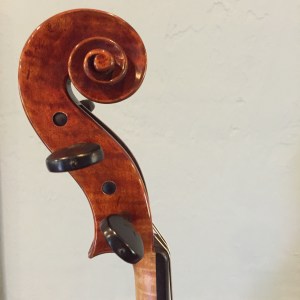
Playing music as an exercise in Mindfulness mediation.

When you’re in the midst of performing a hard piece of music you can’t worry about the next passage, you become absorbed into each note as it happens as you play it… making this one right now as beautiful as it can be, just this one , then the next, then another. Once it’s played it’s forgotten, NO regrets allowed! you can’t live in the past or the future when you preform a piece. If you do, your mind isn’t fully present in the current note and it isn’t as beautiful as it can be, it’s distracted…just played , just sounded.

When we preform we must learn to release our conscious worries, fears, failures, and live in the present moment, or better yet,  present,  single note. We must release ourselves from the audience, from judgement, and become completely absorbed in the note we are playing then leave it behind and give our full attention and soul to the new note we play. This is the essence of mindfulness. Just like walking meditation where you concentrate on just one step, the current step, kissing the earth with the souls of your feet, in music performance you concentrate on just this note kissing the souls of the audience and bringing the piece  to the emotional plane of existence.

Blog at WordPress.com.

Up ↑